-
 Mexico
-
 South Africa
-
 Korea Republic
-
 Czech Republic
-
 Canada
-
 Switzerland
-
 Qatar
Qatar
-
 Bosnia and Herzegovina
-
 Brazil
-
 Morocco
-
 Haiti
Haiti
-
 Scotland
-
 United States
-
 Paraguay
-
 Australia
-
 Türkiye
-
 Germany
-
 Curaçao
-
 Côte d'Ivoire
-
 Ecuador
-
 Netherlands
-
 Japan
Japan
-
 Tunisia
-
 Sweden
-
 Belgium
-
 Egypt
Egypt
-
 Iran
Iran
-
 New Zealand
-
 Spain
Spain
-
 Cabo Verde
-
 Saudi Arabia
-
 Uruguay
-
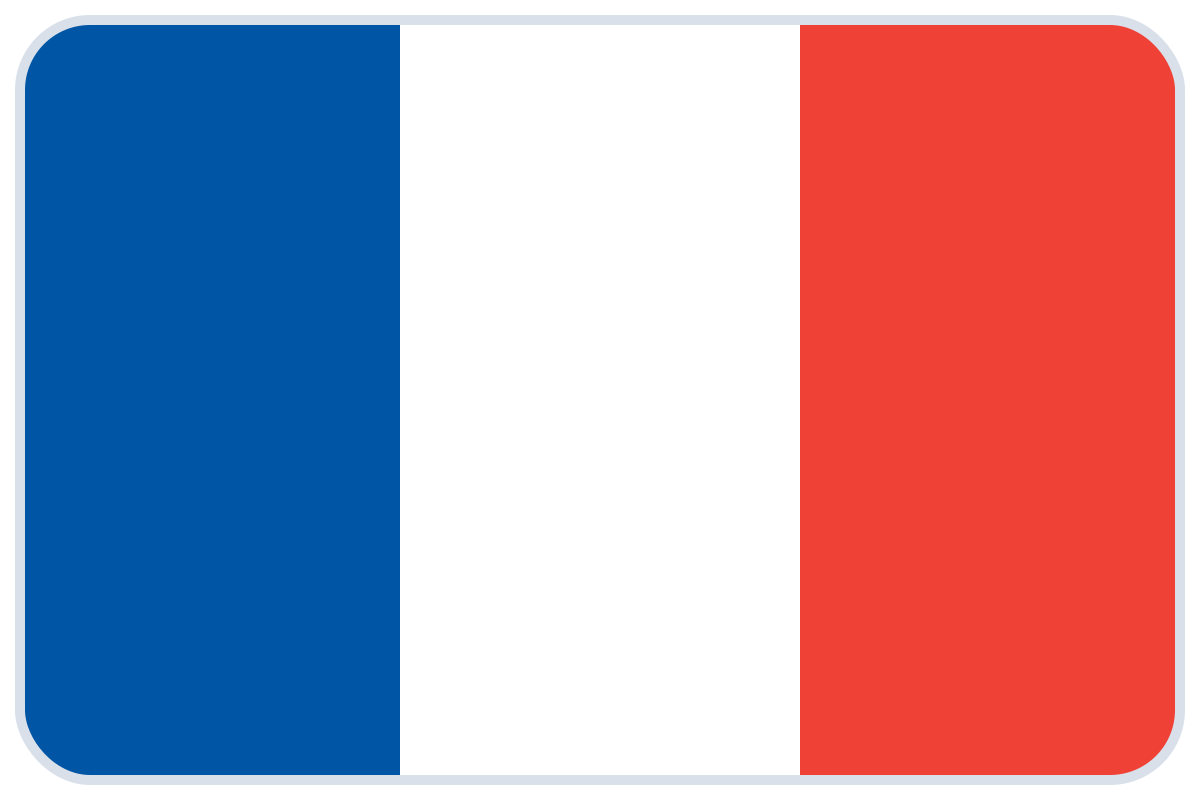 France
-
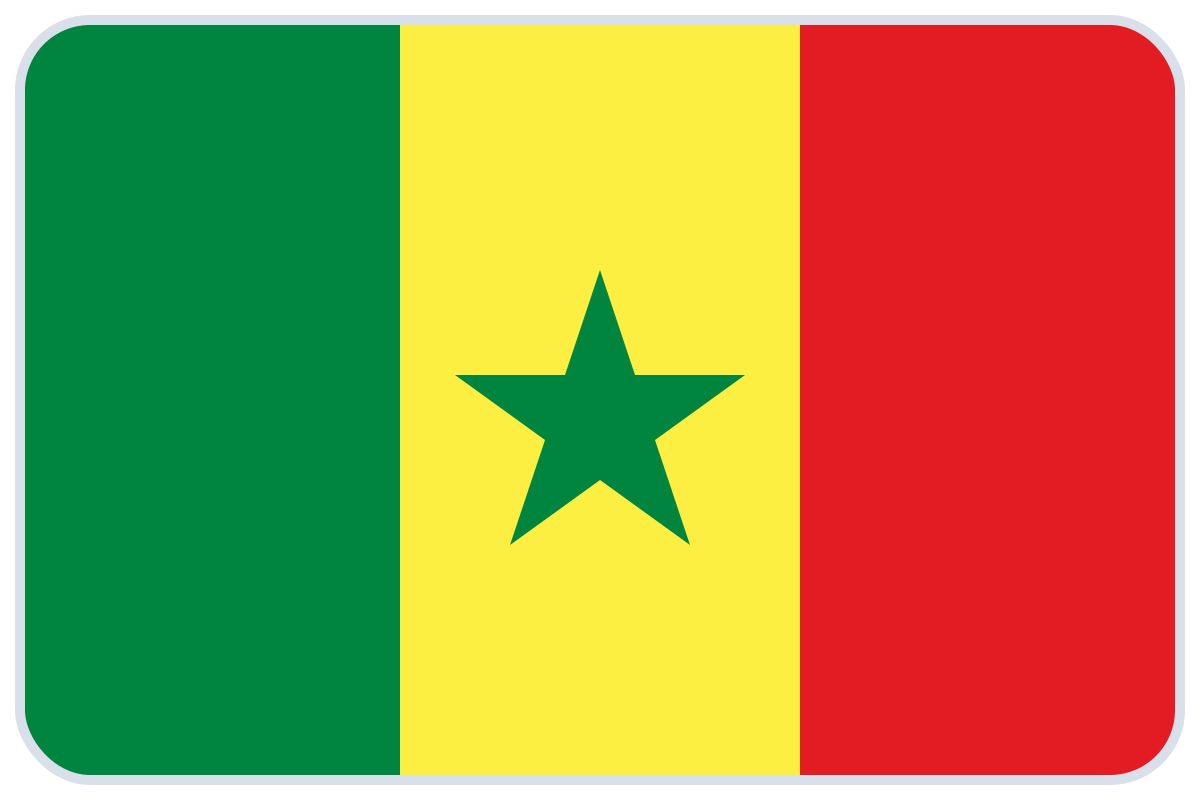 Senegal
-
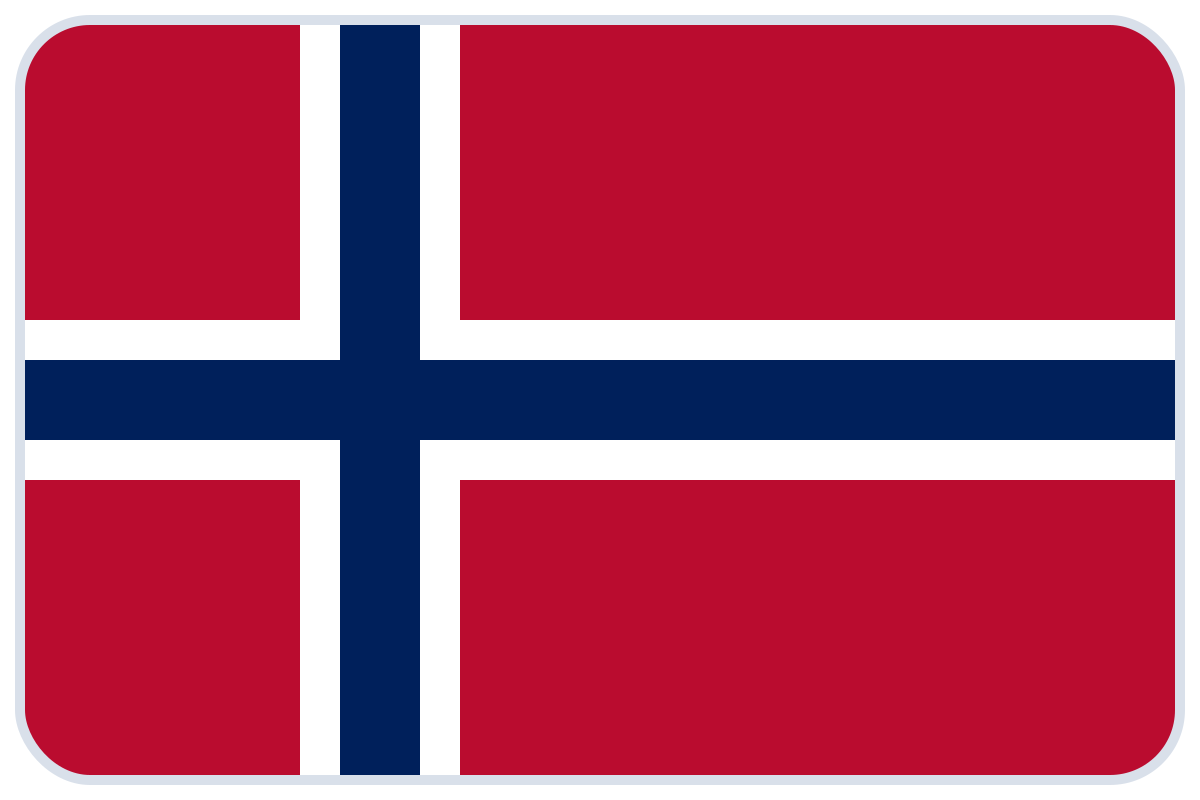 Norway
-
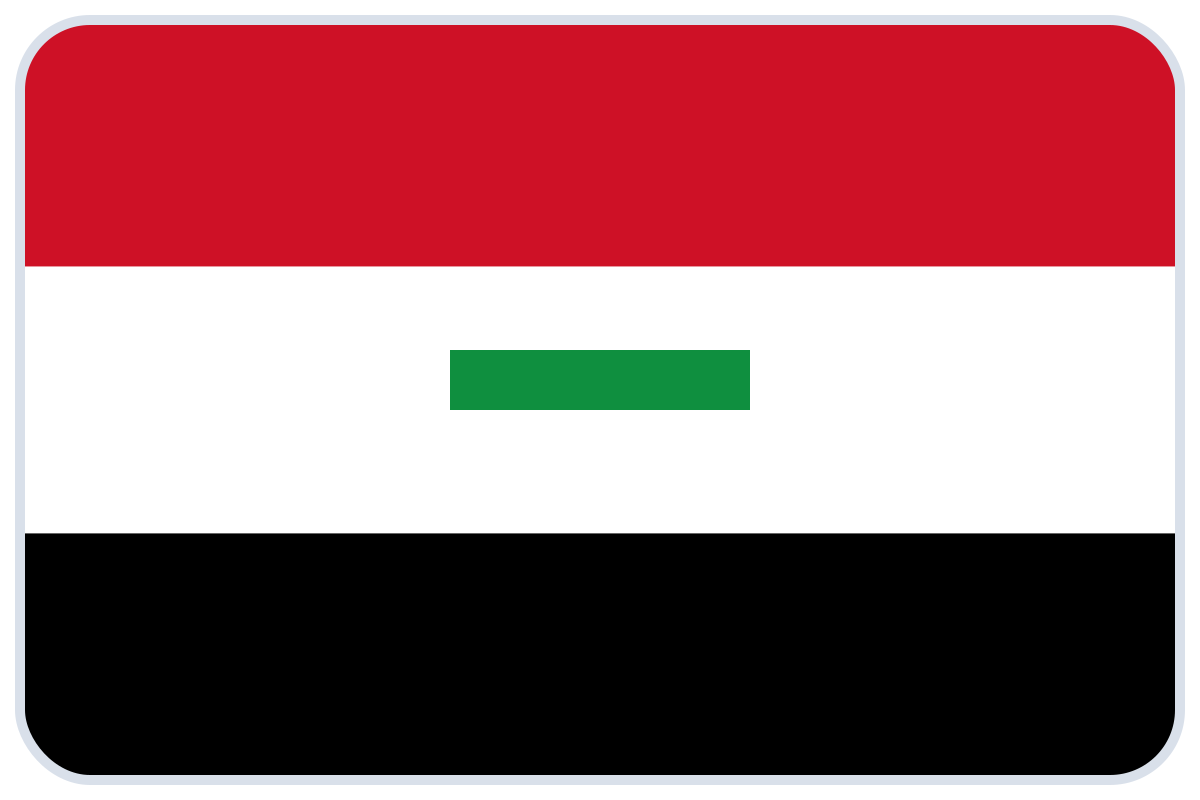 Iraq
Iraq
-
 Argentina
-
 Algeria
-
 Austria
-
 Jordan
-
 Portugal
-
 Uzbekistan
-
 Colombia
-
 Congo DR
-
 England
-
 Croatia
-
 Ghana
Ghana
-
 Panama
FIFA World Cup 2026 Fixtures
Football doesn't get bigger than this. The FIFA World Cup 2026 will be the largest edition of the tournament ever staged, bringing together 48 national teams across 104 matches in three countries simultaneously. Canada, Mexico, and the United States are co-hosting across 16 cities, and the sheer geographic spread alone makes this unlike anything the sport has seen before.
World Cup Fixtures 2026: Understanding the Expanded Tournament Format
For the first time, 48 teams will compete instead of the previous 32. That means 104 matches total, spread across venues in three countries. The United States hosts the bulk of the action, with 11 cities and 78 matches. Mexico and Canada each host 13 matches across three and two cities respectively.
| Country | Host Cities | Number of Matches |
|---|---|---|
| United States | 11 cities | 78 matches |
| Mexico | 3 cities | 13 matches |
| Canada | 2 cities | 13 matches |
Twelve groups of four teams replace the previous eight groups of four. More teams, more matches, more paths to the knockout rounds. For smaller footballing nations, that extra breathing room in the group stage genuinely changes the math on qualifying from it.
Group Stage Showdowns: The Must-Watch World Cup 2026 Fixtures
The group stage is where the tournament finds its character. Upsets happen here. Reputations get built or dismantled in the span of three games.
The Expanded Format's Impact on Group Dynamics
Twelve groups means the action spreads further across all three host nations, and the increased number of teams creates genuine uncertainty about which sides will cruise through and which will struggle. A nation like Senegal, which shocked France in 2002, or Costa Rica, which topped a group containing Italy and England in 2014, could easily find the conditions to do something similar again. Lesser-known sides now have more room to build momentum before the pressure of elimination football kicks in.
As fans prepare for the group stage, platforms like Dexsport are changing how supporters engage with matches, adding prediction markets and real-time tools that go beyond passive viewing.
Anticipated Clashes and Key Dates
Specific group compositions haven't been announced yet. What's already clear, though, is that the expanded draw increases the chances of blockbuster early matchups. Brazil and Germany in the same group, or a resurgent African side facing a European heavyweight on North American soil, aren't just hypotheticals anymore. They're genuinely plausible outcomes of the draw.
Dive into the battle for early supremacy with insights into Group A's formidable challengers, where opening results could define a nation's entire tournament trajectory. The fierce competition in Group B means every single point will matter for progression.
From the opening matches in each host nation through to the decisive final group games, nothing in this phase is throwaway. Each result ripples forward.
World Cup Qualifiers Fixtures and Play-off Drama
Getting to the tournament is its own competition. Six confederations, UEFA, CONMEBOL, CONCACAF, AFC, CAF, and OFC, are all running qualification campaigns to fill the 48 available spots.
Global Gauntlet: Confederation Battles
Europe's path runs through familiar heavyweights. Spain, Italy, and England navigate difficult groups where a single bad run of results can create real jeopardy. South America is arguably the toughest qualification system in world football. Argentina and Brazil compete in a league format where every point is contested, and mid-table obscurity can persist for months before a team either surges or collapses.
Africa has expanded its allocation, and nations like Morocco and Senegal are competing with genuine ambition rather than just hoping to qualify. Asia's development continues to produce competitive sides, while CONCACAF teams, including the three co-hosts who qualify automatically, compete hard for the remaining automatic berths. The OFC's single dominant nation typically fights through an inter-confederation play-off for a spot.
Those inter-confederation play-offs are often the most emotionally raw matches of the entire qualifying cycle. One game, one chance, and then it's over. Fans can follow all the official FIFA World Cup 2026 qualifying action directly from the source.
Key FIFA World Cup 2026 Fixtures in the Knockout Rounds
This is where the tournament becomes something else entirely. With 48 teams, the knockout phase introduces a Round of 32 before narrowing to the familiar Round of 16, Quarterfinals, and Semifinals. More rounds means more sudden-death football, more penalty shootouts in front of packed stadiums, more moments that get replayed for decades.
For the full tournament structure and match progression, the official FIFA World Cup 2026 match schedule and results hub has comprehensive coverage.
The Path to the Final
Every knockout win demands something different. The Round of 32 requires composure under pressure for the first time. The Round of 16 tests tactical flexibility. By the Quarterfinals, only eight teams remain, and the matches tend to tighten considerably. Semifinals are their own category of nerve-shredding football, where tactical conservatism and individual brilliance collide in strange ways.
Think of Maradona's 'Hand of God,' Zidane's headbutt, or Greece winning Euro 2004 against every reasonable expectation. Knockout football generates those moments precisely because the stakes are absolute. Dallas, New York, Mexico City, each of these venues will host matches that carry that weight.
Specific dates and venues for the climactic rounds haven't been confirmed yet. What's certain is that the longer knockout format guarantees more of these high-pressure encounters than any previous World Cup.
Beyond the Pitch: Engaging with FIFA World Cup 2026 Fixtures
Watching the games is only part of it now. Real-time statistics, performance dashboards, and live match tracking have changed how fans consume football. Fantasy leagues and prediction markets have turned passive viewing into something more participatory.
For fans looking to engage through cryptocurrency-based predictions, Dexsport offers a platform built around that kind of strategic involvement. It's a different way to connect with the tournament, one that rewards football knowledge rather than just enthusiasm.
Blockchain-based prediction systems are a growing part of this space. Cointelegraph covers how cryptocurrency technology intersects with sports betting and fan engagement, which is worth following as these platforms continue to develop ahead of 2026.
The World Awaits
48 teams. 104 matches. Three countries. The scale of the FIFA World Cup 2026 is genuinely without precedent, and the expanded format creates more opportunities for drama at every stage, from the opening group games through to the final in whatever city ultimately hosts it.
The countdown is already running. Prediction markets, fan events, and qualifying drama are all building toward something that billions of people will watch. Get involved early.
Frequently Asked Questions About the FIFA World Cup 2026
When do the FIFA World Cup 2026 matches start?
An official start date hasn't been announced yet. Check the FIFA website for updates as the tournament approaches.
How many teams will compete in the World Cup 2026 tournament?
48 national teams will compete, up from the 32 that participated in previous editions.
Where will the World Cup 2026 final be held?
The host city and venue for the final haven't been officially confirmed.
Will there be a third-place play-off in the 2026 tournament?
No official confirmation on this yet, though the World Cup has historically included a third-place match.
How does the new format affect the overall World Cup fixtures 2026 schedule?
The jump from 32 to 48 teams adds a Round of 32 to the knockout phase and increases the total match count from 64 to 104, making the tournament noticeably longer with more matches at every stage.